Blazor and Razor in VS Code: C# Tooling for .razor Files
Blazor components, Razor Pages and MVC views now get the same Roslyn engine as your C# files: hover, completion, diagnostics, go to definition, references and rename, inside the markup.
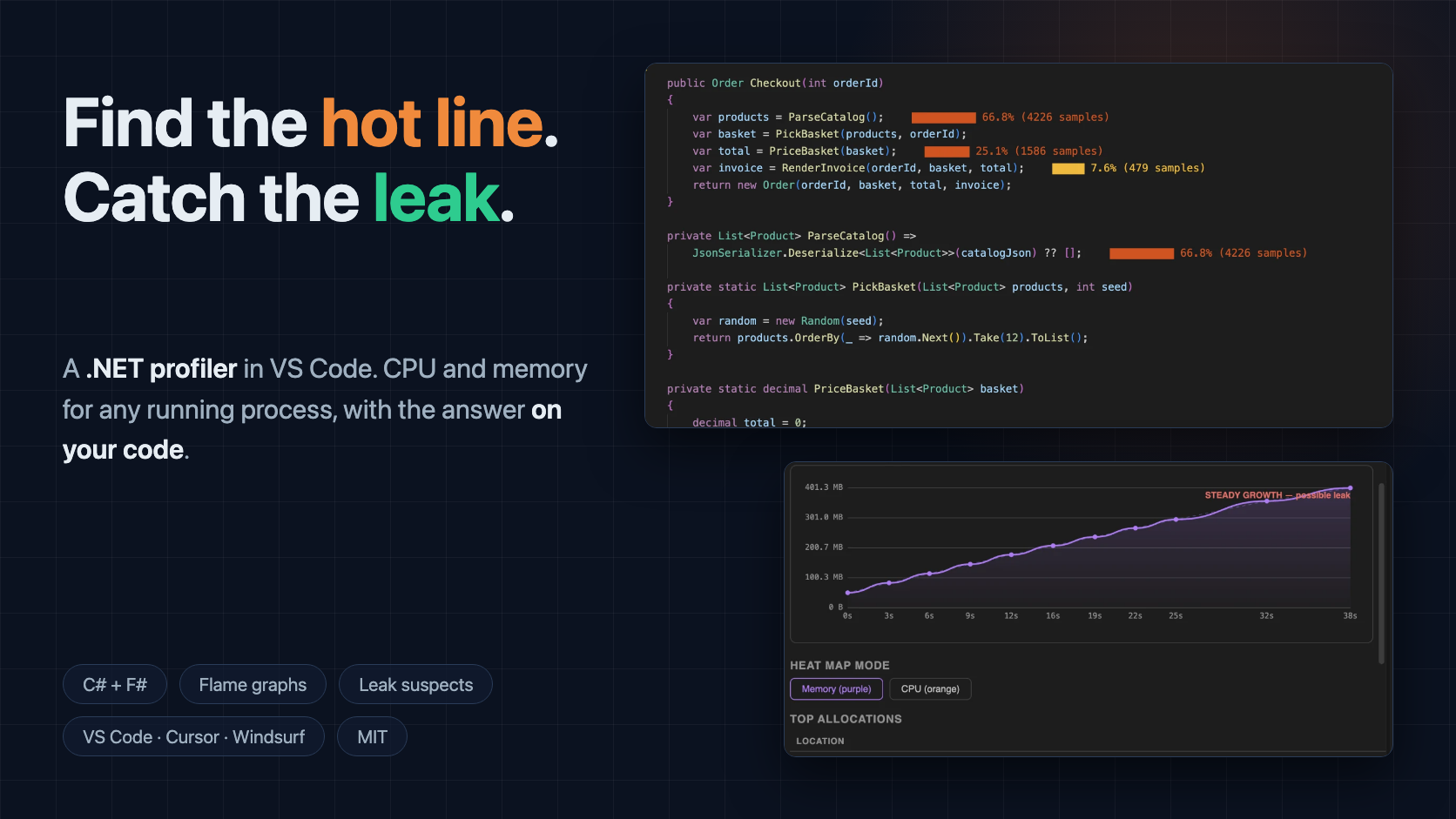
Your app is slow, or its memory keeps climbing. SharpLsp now profiles CPU and memory for any running .NET process without leaving VS Code, and it puts the answer on the line of code that caused it.
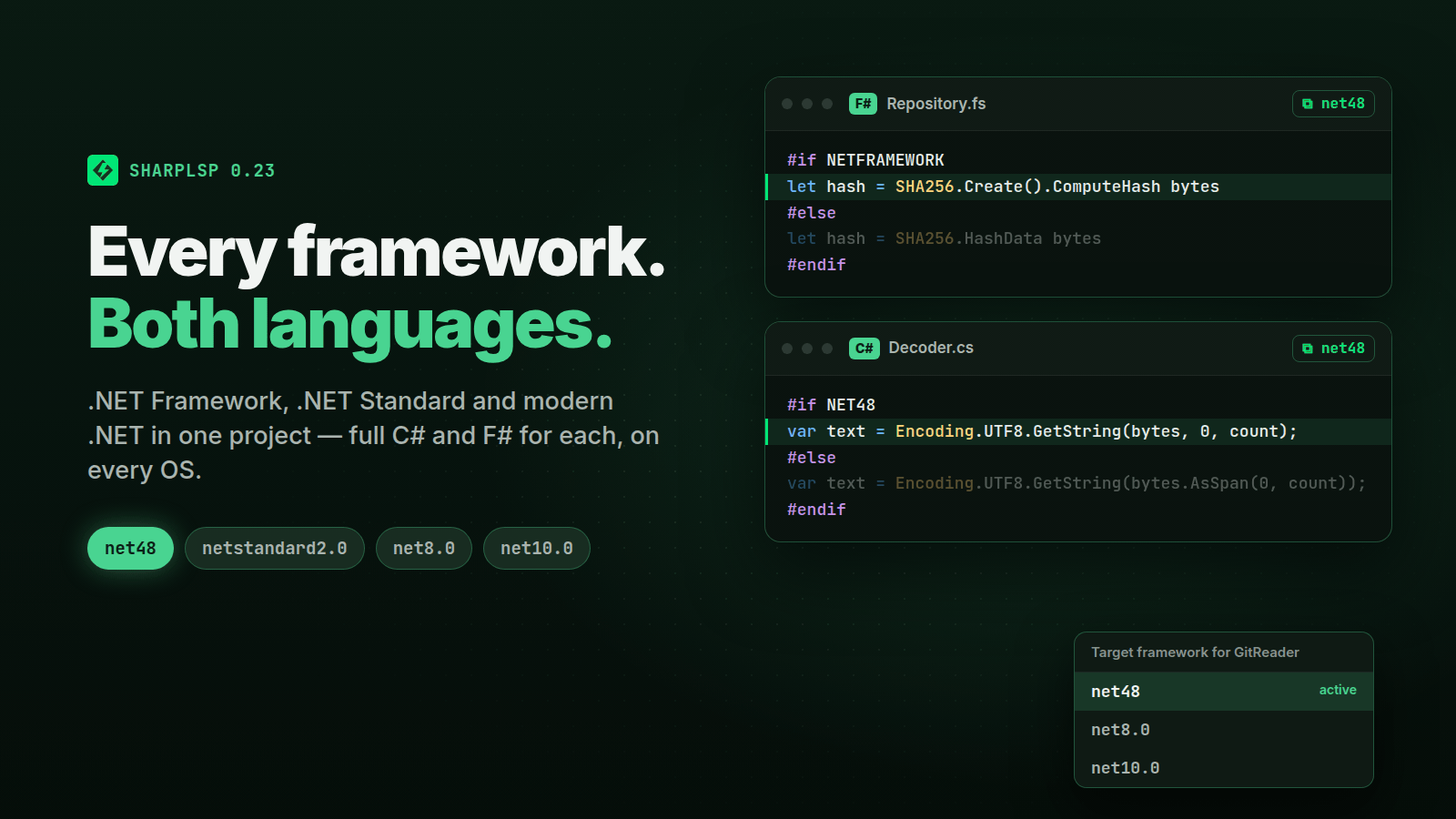
A lot of the .NET that ships every day is .NET Framework 4.8, on Windows. SharpLsp edits it on every OS, and on Windows it also runs and tests it, next to the net10.0 build of the same project.
Real libraries target net462 and net10.0 in the same project file. SharpLsp 0.23 gives every one of those frameworks the full experience — in C# and F# — and a Test Explorer that runs each of them.
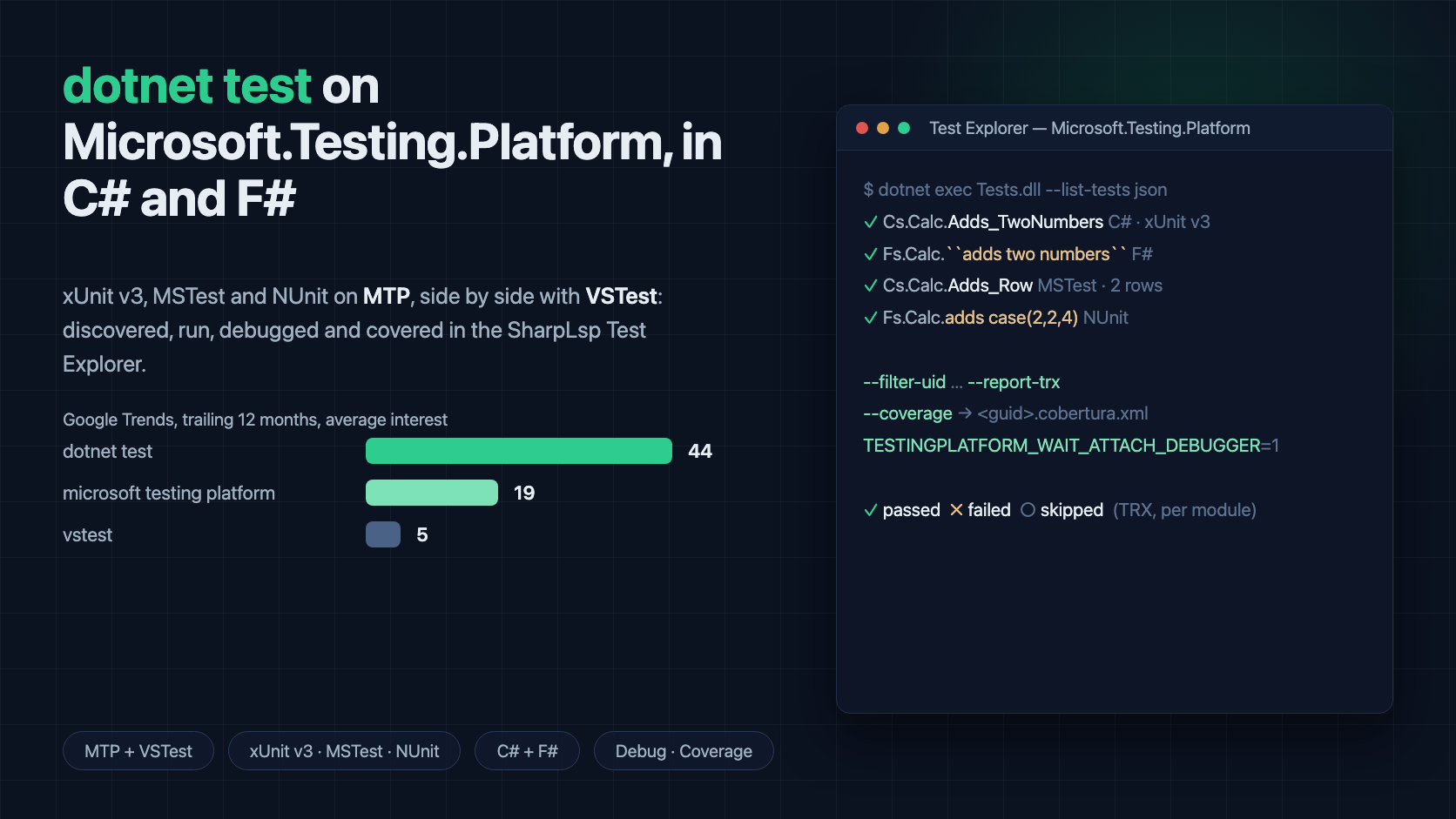
xUnit v3 4.0 runs on Microsoft.Testing.Platform only, and a VSTest-only Test Explorer shows an empty tree for it. SharpLsp now runs MTP and VSTest side by side, in C# and F#, including discovery, ▶, Debug and code coverage.
0.19.0 fixes the inner loop for real: F5 and launch profiles that behave like dotnet run, async stacks that read like your code instead of MoveNext soup, and a Test Explorer backed by 4,800 lines of end-to-end tests.
Diagnostics are only useful when developers can trust them completely. SharpLsp's goal is total accuracy: every real error shown, every false positive eliminated.
We are done waiting for Microsoft to fix .NET tooling. SharpLsp is our answer: a Rust-hosted LSP server that delivers first-class C# and F# support in every editor, with zero proprietary dependencies.