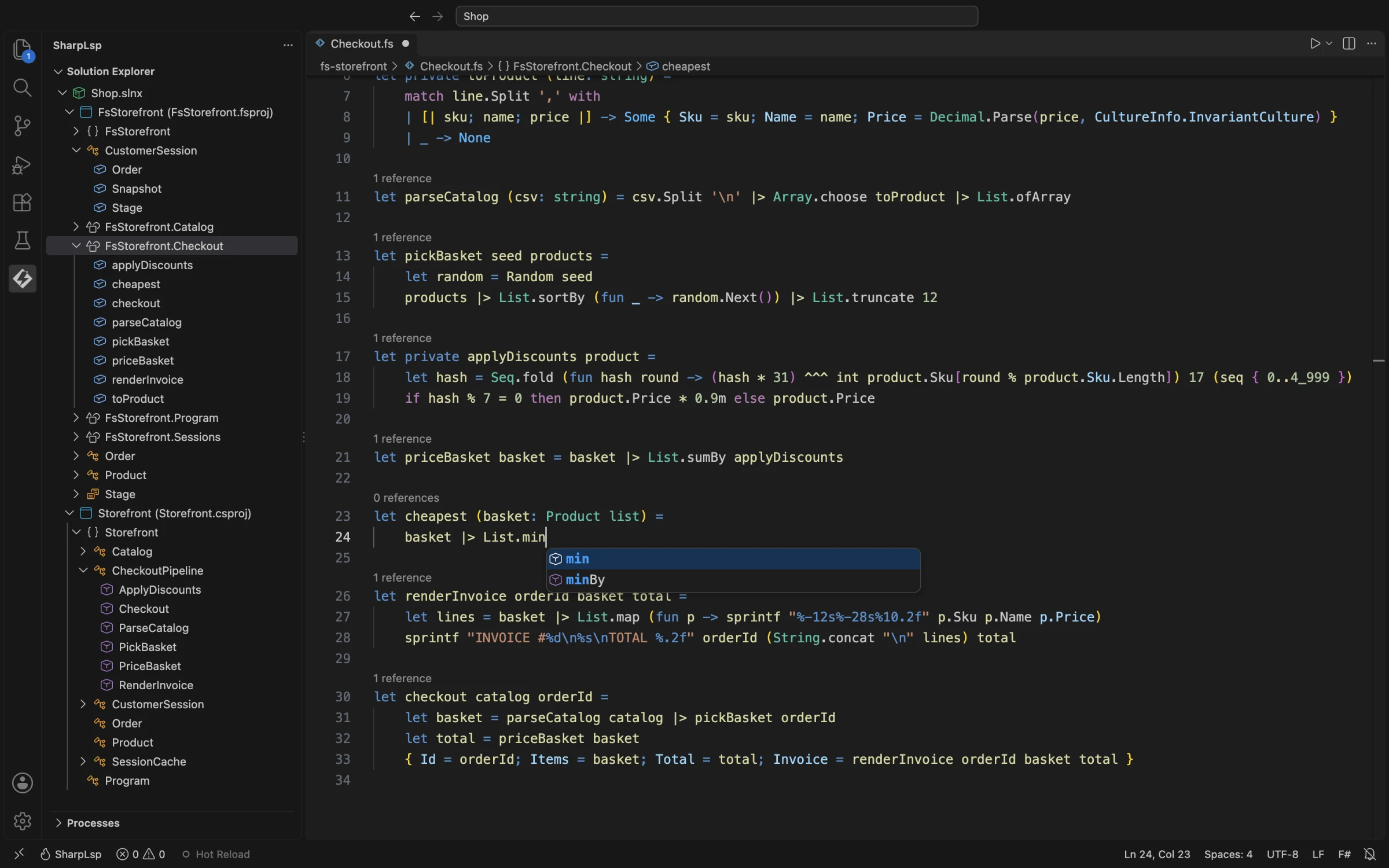
Code Completions
SharpLsp provides semantic completion for both C# and F#. The Rust host routes each request to Roslyn or the F# Compiler Service (FCS), then returns standard LSP completion items with replacement ranges.
C# Completion
C# completion uses Roslyn's CompletionService. It covers the symbols and keywords Roslyn makes available at the cursor, including members, types, namespaces, locals, parameters, and contextual keywords.
Each item includes a text edit, so accepting a completion replaces the current identifier instead of appending to it. completionItem/resolve asks Roslyn for the final change and returns any additional edits. For an import completion, those edits can add the required using directive.
F# Completion
F# completion uses FCS GetDeclarationListInfo. Member and in-scope symbol completion are supported, and accepted items replace the current token correctly.
Two FSAC-parity gaps remain:
- Symbols from unopened namespaces are not yet added to the list.
completionItem/resolveis implemented, but it does not yet insert anopendeclaration.
Triggering Completion
SharpLsp advertises . as its automatic trigger character for member access in both languages. Editors can also request completion explicitly, such as with Ctrl+Space in VS Code.
Characters such as ( and , belong to signature help, not completion, and are advertised separately.
LSP Capability
{
  "completionProvider": {
    "resolveProvider": true,
    "triggerCharacters": ["."]
  }
}
Completion results are computed from the current unsaved buffer. If the relevant language sidecar is disabled or unavailable, SharpLsp returns no semantic items rather than fabricating results.